
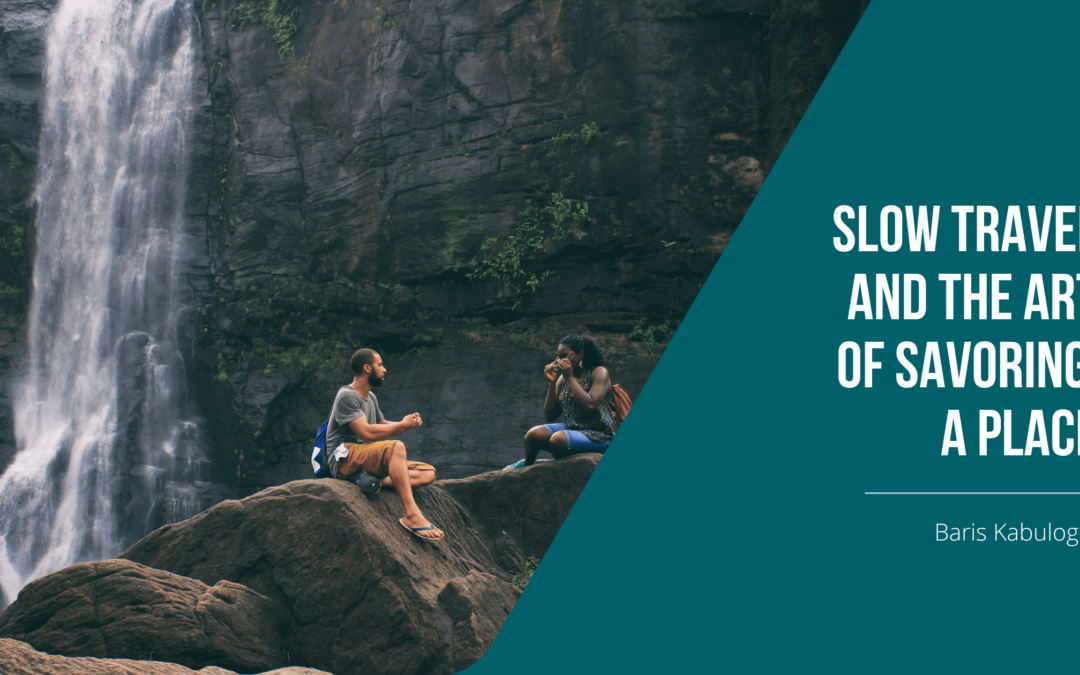
Modern travel is often measured in numbers: how many countries visited, how many cities checked off, how many photos snapped before rushing to the next destination. Yet a quiet counter-movement is gaining traction—slow travel. Much like the slow food movement that emerged as an antidote to fast food culture, slow travel rejects the rush and instead emphasizes depth, presence, and genuine connection.
At its heart, slow travel is less about distance and more about immersion. It’s about staying longer in fewer places, allowing the rhythms of local life to seep in, and cultivating enrichment that outlasts the trip itself.
Beyond the Bucket List
The typical bucket-list approach to travel often prioritizes landmarks over lived experience. You may stand before the Colosseum in Rome or Eiffel Tower in Paris, but how much of the place do you truly know if you’ve already moved on within 48 hours? Slow travel asks: What if the greatest enrichment doesn’t come from seeing more, but from seeing deeper?
A traveler who spends three weeks in a small Italian village, shopping at the weekly market, learning to bake bread with a local family, or helping with the olive harvest, may walk away with memories richer than dozens of passport stamps. The experience becomes layered with relationships, flavors, and stories—things no travel guide can replicate.
Travel as a Dialogue
Slow travel shifts the traveler from being a spectator to a participant. Instead of consuming a place, you enter into a dialogue with it. That might mean volunteering at a community garden in Kyoto, taking part in traditional weaving workshops in Peru, or joining morning tai chi in a Shanghai park. These aren’t “attractions” in the usual sense. They’re ways of weaving yourself into the daily fabric of a place, even if only temporarily.
Such experiences foster empathy and humility. You return home not only with souvenirs, but with insights about how other communities live, adapt, and thrive.
Sustainability Through Slowness
There’s another layer to slow travel—sustainability. By flying less often, staying longer, and supporting local businesses, slow travelers reduce their environmental footprint while directly benefiting the communities they visit. Choosing a family-owned guesthouse over an international chain, taking a regional train instead of a quick domestic flight, or savoring seasonal meals made from local produce—all of these choices align personal enrichment with global responsibility.
Enrichment Beyond Borders
The beauty of slow travel is that it doesn’t require faraway destinations. You can apply the same principles in your own region. Spending a month exploring the hidden trails, farmers’ markets, and cultural events of a nearby town may reveal just as much wonder as traveling across continents.
The Gift of Time
Ultimately, the true luxury of slow travel is time. Time to watch a sunset without checking your itinerary. Time to linger over conversations with strangers-turned-friends. Time to let a place change you, subtly but profoundly.
In a world that constantly urges us to do more and move faster, slow travel invites us to pause. To listen. To savor. And in doing so, it transforms not just how we travel, but how we live.